
Short-Term & Respite Care: Assisted Living and Memory Care Options for Families
Caregiving can feel overwhelming. Short-term and respite care give families practical, reliable support—time to rest or handle other responsibilities while a loved one stays somewhere safe and well cared for. Below we walk through the kinds of respite services available, the benefits they bring, and what memory care and assisted living short-term stays look like. You’ll also see how Lakeshore Woods structures its respite options so you can decide what fits your family best.
Key Takeaways
- Respite care delivers temporary relief for family caregivers while ensuring loved ones receive professional, compassionate support.
- Stays are flexible—ranging from a few hours to several weeks—so families can choose what works for them.
- Memory care provides specialized programs and staffing for people with dementia and other cognitive challenges.
- Assisted living short-term stays support recovery with structured daily care and opportunities for social engagement.
- Lakeshore Woods provides 24/7 trained staff, comfortable rooms, and balanced meals for respite guests.
- Using respite care can lower stress and reduce the risk of caregiver burnout by creating regular, planned breaks.
- Short-term stays help seniors stay socially connected, which supports emotional health and recovery.
- When choosing respite care, review eligibility, costs, and any available insurance coverage before booking.
- Visiting local facilities and scheduling tours helps families find the best match for their needs.
Features of Respite Care
Respite care is built to give caregivers a reliable break while their loved ones receive attentive, professional care. Core features include:
- Temporary Support: Care can run from a few hours to several weeks, depending on what the family needs.
- Flexible Lengths of Stay: Options range from day programs to short residential stays, so families can pick the timing that fits their schedule.
- Professional Care Provided: Trained staff handle daily activities, medication management, and companionship to keep residents safe and comfortable.
These elements make respite care a practical option for families balancing caregiving with other responsibilities.
Benefits of Respite Care

Respite care supports both caregivers and the people they care for. Key benefits include:
- Caregiver Relief: Short breaks reduce stress and help prevent burnout, so caregivers can return to their role more rested.
- Social Interaction for Seniors: Regular social activities and interactions with staff and peers improve mood and reduce isolation.
- Improved Recovery Outcomes: Structured routines, rehabilitation support, and professional supervision can help seniors recover more smoothly after illness or surgery.
Taken together, these benefits show how short-term care strengthens the health of both caregivers and seniors.
Memory Care Specifics
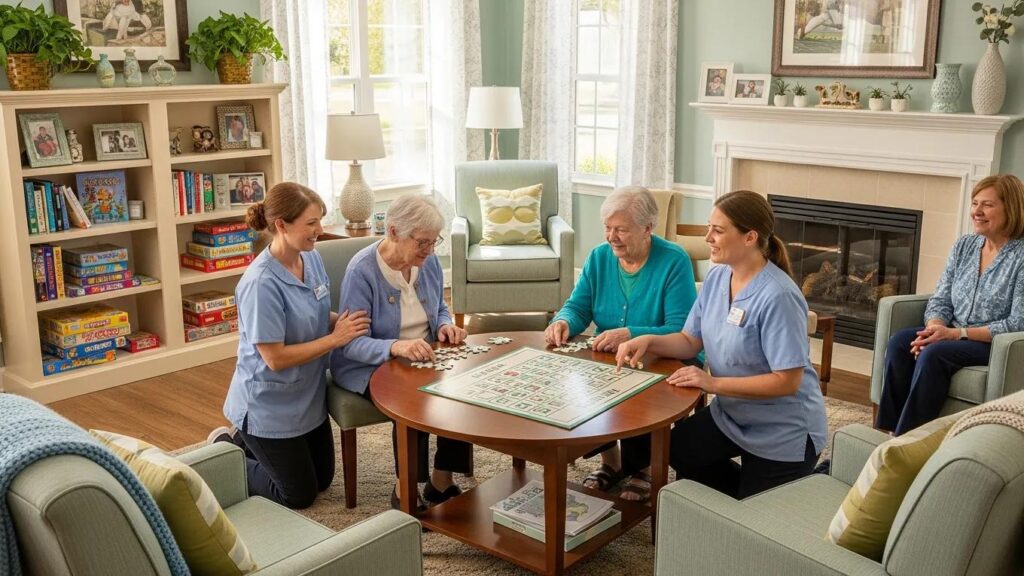
Memory care focuses on people with Alzheimer’s and other dementias. These programs emphasize safety, routine, and personalized support, including:
- Specialized Support for Dementia: Staff trained to respond to the behaviors and needs tied to cognitive decline.
- Personalized Care Plans: Care is tailored to each resident’s abilities, preferences, and medical needs.
- Engaging Activities: Programs use purpose-driven activities to encourage memory, movement, and social connection.
Knowing these specifics helps families choose the right memory care setting when cognitive needs are a concern.
Lakeshore Woods Respite Care
Lakeshore Woods offers respite services designed to be flexible and reassuring for families. Highlights include:
- Trained Staff Available 24/7: Caregivers are on-site around the clock to address medical and daily care needs.
- Comfortable Accommodations: Rooms and common areas are made to feel home-like and welcoming.
- Nutritious Meals Provided: Balanced menus are prepared with seniors’ dietary needs in mind.
These features make Lakeshore Woods a reliable choice for families seeking short-term support.
Frequently Asked Questions
What types of respite care services are available for seniors?
Respite care comes in several forms: in-home aides who visit by the hour, adult day programs that provide daytime supervision and activities, and short-term stays in assisted living or memory-care communities. In-home care keeps seniors in familiar surroundings; day programs offer social engagement; and short residential stays provide full supervision and support, which is often best after an illness or surgery.
How can families assess the quality of respite care facilities?
Visit potential facilities, ask about staff training and certifications, and confirm licensing or accreditation. Check the caregiver-to-resident ratio, sample activity schedules, and the overall atmosphere. Talk with current residents and their families when possible—those conversations often give the clearest sense of day-to-day life.
Are there specific eligibility criteria for memory care respite services?
Eligibility usually depends on a clinical assessment of cognitive status and care needs. Facilities typically require health information and may perform their own evaluations to ensure they can meet the resident’s needs safely. Ask the facility about any required documentation or assessments before scheduling a stay.
What should families consider when planning for respite care?
Consider medical needs, medication routines, preferred activities, and how long the stay should be. Review costs and insurance coverage, and schedule a tour to meet staff and see accommodations. Clear communication with the care team about routines and preferences will make the transition smoother for everyone.
How do costs for respite care vary, and what factors influence pricing?
Pricing depends on the type of care, location, and length of stay. In-home aides are often billed hourly; assisted living and memory care may offer daily or weekly rates. Specialized medical services or private rooms can increase costs. Always request a full fee breakdown and ask whether insurance, veteran benefits, or long-term care policies might offset expenses.
What role does social interaction play in respite care for seniors?
Social engagement is central to wellbeing. Regular interaction with staff and peers helps reduce loneliness, stimulates cognition, and supports emotional health. Many facilities schedule group and one-on-one activities to keep residents active and connected, which also supports recovery after illness.
How can caregivers prevent burnout while utilizing respite care services?
Use respite regularly—short, planned breaks are more effective than rare, last-minute ones. Prioritize self-care, maintain social supports, and delegate tasks where possible. Openly discuss expectations with family members and care staff so your breaks restore energy rather than add worry.
Conclusion
Respite care offers practical, compassionate relief that benefits both family caregivers and the people they support. With flexible options, trained staff, and programs tailored to recovery or cognitive needs, short-term stays can provide safety, social engagement, and peace of mind. Learn about local providers like Lakeshore Woods to find the solution that fits your family’s needs.
What Are Short-Term and Respite Care Services in Senior Living?
Short-term and respite services give temporary, professional support for seniors and their families. These services let caregivers take breaks or handle other priorities while ensuring loved ones have attentive care, structured days, and access to activities and medical supervision as needed.
Defining Assisted Living Short-Term Stays and Memory Care Respite Services
Assisted living short-term stays focus on help with daily activities—bathing, dressing, medication reminders—without specialized dementia support. Memory care respite is designed for people with cognitive impairment and includes specialized staffing, secure environments, and programs tailored to memory-related needs.
Who Benefits from Temporary Senior Care Facilities?
Temporary care is helpful for many situations, including:
- Seniors Recovering from Illness: Extra supervision and support can speed recovery and reduce readmission risk.
- Caregivers Needing Relief: Time away helps family caregivers rest, handle responsibilities, or travel.
- Families Considering Assisted Living: Short stays let families evaluate a community as a possible long-term choice.
These options bring practical support for families during transitions and recovery periods.
How Do Assisted Living Short-Term Stay Programs Support Families?
Short-term programs offer a structured, supervised setting so family members can step away with confidence. They combine daily care, social activities, and medication oversight—helping seniors stay engaged while easing family concerns.
Key Features and Benefits of Assisted Living Short-Term Stays
Assisted living short-term stays typically include:
- Temporary Support: Time-limited care that relieves family duties while maintaining safety and routine.
- Flexible Lengths of Stay: Options range from a few days to several weeks, depending on need.
- Ideal for Recovery: Structured care supports healing after hospital stays or procedures.
These features make short-term stays a practical bridge during changes in health or family circumstances.
Booking Options and Tour Scheduling for Assisted Living Services
To explore assisted living, contact the facility to arrange a tour, meet staff, and review care plans. Tours let families see rooms, sample menus, and get a clear picture of daily life—helping them make an informed choice.
What Should You Know About Memory Care Respite Services?
Memory care respite offers focused support for cognitive conditions. Families should learn about staffing ratios, safety measures, activity programming, and the assessment process used to determine eligibility and appropriate levels of care.
Specialized Cognitive Recovery Programs and Dementia Support
Programs for cognitive recovery use structured, evidence-informed activities to support memory, attention, and daily functioning. These activities, paired with consistent routines, help residents feel safe and engaged while supporting their cognitive needs.
Eligibility Criteria and Duration for Memory Care Respite
Eligibility depends on clinical assessments and the individual’s care needs. Facilities will discuss acceptable lengths of stay and any medical or behavioral requirements before admitting a respite resident to ensure a safe fit.
How Much Do Short-Term and Respite Care Programs Cost?
Costs vary by type of service, location, and level of care. Ask for detailed pricing, what’s included, and any additional fees. Compare options and check whether private insurance, long-term care coverage, or veteran benefits can help offset expenses.
Pricing Details and Insurance Coverage for Temporary Senior Care
Temporary care pricing reflects services provided—basic supervision, skilled nursing, or specialty programs each carry different rates. Verify what insurance or benefits might cover the stay and request an itemized estimate before committing.
Comparing Costs of Assisted Living and Memory Care Respite Services
When comparing costs, weigh the level of specialized care needed. Assisted living may be more economical for those without cognitive challenges; memory care typically costs more because of higher staffing levels and secure programming.
Where Can Families Find Respite Care Programs Near Me?
Start by searching local senior living communities, asking healthcare providers for recommendations, and checking community resources. Online directories and local aging services can also point you to nearby respite options.
Locating Temporary Senior Care Facilities in Your Area
Visit facilities in person, review staff credentials, and compare services offered. Seeing a location firsthand and asking specific questions will help you identify the best match for your loved one.
What Are the Benefits of Short-Term Senior Care for Caregivers?
Short-term care supports caregivers by providing:
- Emotional Relief: Time away reduces stress and gives caregivers space to recharge.
- Peace of Mind: Professional supervision reassures families that their loved one is safe.
- Social Interaction for Seniors: Engaging programs help residents stay connected and active.
These benefits reinforce why short-term options are a valuable part of caregiving plans.
Relief from Caregiver Burnout and Stress Management
Regularly using respite care helps prevent burnout by giving caregivers predictable, restorative breaks. That support benefits the whole family—physically, mentally, and emotionally.
Caregiving demands are real and sustained—without relief, even the most devoted caregivers can become exhausted.
Understanding & Preventing Caregiver Burnout
1. Caregiver burnout occurs when long-term caregiving depletes a person’s physical and emotional reserves. Studies show between 40 and 70 percent of caregivers experience significant burnout symptoms at some point. Burnout isn’t a sign of failure or lack of love; it’s a predictable response to prolonged stress that can harm health, relationships, and the quality of care provided.
Caregiver Exhaustion: Preventing and Overcoming Burnout in Caregiving
Supporting Family Caregivers Through Flexible Respite Options
Flexible respite gives families choices—short daytime help, overnight stays, or longer temporary placements—so caregivers can plan breaks that actually restore their energy and support long-term caregiving.
Conclusion
Respite care strengthens both caregivers and the people they care for by offering reliable, compassionate short-term support. With flexible options and specialized programs available at communities like Lakeshore Woods, families can find the care that fits their medical needs and lifestyle. Reach out to local providers to learn more and plan the right respite solution for your family.
Disclaimer:
Some images used in this blog are AI-generated and are included for illustrative purposes only. If you have any questions about our services or community, please contact us through our website or call (810) 385-3185 for assistance.